Studio Brussel, the Flemish public broadcaster’s music station, first went on air on 1 April 1983. Known to listeners as StuBru, it has long been a showcase for new rock and other alternative music in Belgium.
For readers following the Belgian rock scene, the station is a useful starting point, because its on-air programming, festival coverage and charity events show where the country’s music culture meets its audience.
How Studio Brussel began
The station’s own history brochure, published by the VRT, describes Studio Brussel as an answer from the BRT to the success of local radio stations, a new channel that broadcast young music and quick news. The brochure records that it went on air for the first time on 1 April 1983 on FM 102.8, then as a regional Brussels station of the BRT.
VRT NWS added another angle in an anniversary report: the station came about partly at the request of Flemish residents of Brussels, who wanted a station of their own. An early presenter quoted in that report said the team focused fully on music and news, with attention to language and style.
The first schedule was modest. The brochure notes that a radio day consisted of two broadcast blocks, a morning rush hour and an evening rush hour, and that airtime was expanded step by step afterwards. It also records that the press supported the new station from the outset and that listeners were enthusiastic, which helped it grow from a regional service into a channel with a wide reach.
Together these accounts explain the station’s character. It was created as a public-service answer to a crowded radio landscape, and from the start it pitched itself at a young audience that wanted new music rather than a general mix.
What the station plays and who it is for
The VRT’s own summary of the founding idea is the clearest statement of purpose: a station for younger listeners built around current music. The brochure sums up the tone that was set in the early years in three words: young, critical and alert.
One concrete example appears in the VRT brochure’s review of a recent year. It describes theme weeks including a week devoted only to Belgian music, which shows how deliberately the station promotes home-grown acts. For a band from Belgium, a week like that is a rare spotlight on a national platform.
- Origin as answer to local radio: BRT answer to local radio success
- Festival live broadcasts: All Areas: Extrema, Rock Werchter, Tomorrowland, Pukkelpop, Laundry Day
- Belgian music week: week of only Belgian music
- Studio Brussel started partly at request of Flemish Brussels residents: regional demand
- Focus on music and news: music and news
Live from the festivals
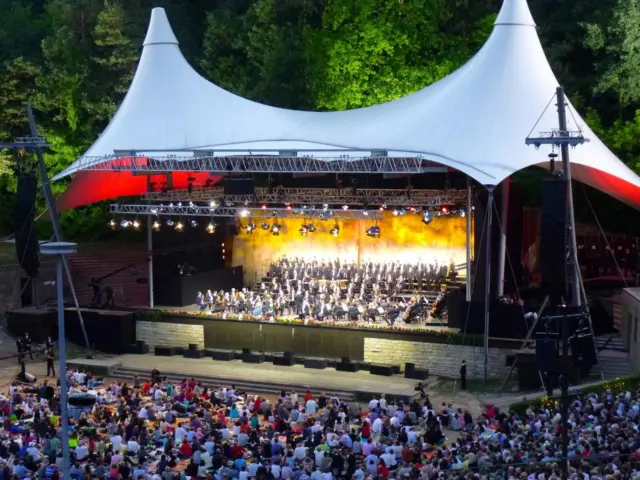
Radio and live music feed each other, and Studio Brussel makes the link visible every summer. According to the VRT brochure’s review of a recent year, the station broadcast live under the banner All Areas from Extrema, Rock Werchter, Tomorrowland, Pukkelpop and Laundry Day, with reports from many other festivals and concerts on radio and digital platforms.
That coverage matters for anyone planning a festival trip. Listeners who cannot attend still hear the sets, and visitors can use the broadcasts to decide which stages to see. The same logic applies to the big Belgian festivals: a broadcast partner extends a festival well beyond its field.
From Brussels to the whole country
The station began as a regional service, and its growth is part of its story. The brochure says that in the summer of 1987 new FM frequencies were added, including transmitters for Antwerp, Limburg and Ghent, and that these made it possible to hear Studio Brussel across the whole country. Later milestones in the same document include round-the-clock broadcasting from 1 October 1996 and, in April 2000, a place as the first VRT network to stream a full day of programming over the internet.
That national reach helps explain why city music guides matter to the station’s audience. Readers planning a night out in the Flemish city of Antwerp can start with the guide to Antwerp live music venues, while the guide to Ghent live music covers the other Flemish city where the station has a long history.
Anniversaries and charity in Ghent and Antwerp
Ghent features repeatedly in the brochure. For its 20th birthday on 13 February 2003, the station celebrated with 2,500 listeners and 20 bands in the Vooruit in Ghent. For its 25th anniversary in 2008, it renamed itself Brudio Stussel for a week, a playful gesture that suggests how the station sees itself. The Music For Life action of December 2008 also took place in Ghent, and the edition of December 2010 was held in Antwerp.
Music For Life and De Warmste Week
Studio Brussel is also known for a charity broadcast. The VRT brochure dates the start of Music For Life to 19 December 2006, when the presenters hosted a request programme for about a week from a glass house in Leuven without eating. The brochure says that action raised more than €2.4 million, with its focus on clearing landmines. VRT NWS adds that a presenter of that edition spent 6 days in a glass house on the Martelarenplein in Leuven.
The idea grew quickly. In an English-language report from 2014, VRT NWS wrote that the annual fundraiser staged by the station raised €2.7 million that year, with transmissions from a field in Boom. The brochure’s account of a later year says the station, as the organising VRT network, broadcast live for a full week before Christmas from the Schorre in Boom.
For readers who mainly care about rock, the charity weeks show another side of the station. The same presenters who introduce new bands also organise public events that bring music, volunteers and listeners together in one place.
Why it matters for Belgian rock fans
A national public broadcaster with a young-music remit gives Belgian bands something rare: a reliable route to a wide audience. Radio play can prompt a first club visit, which can lead to a festival slot, which in turn feeds the station’s own live broadcasts. The pattern is not unique to Belgium, but the VRT documents show it clearly in the way the station links studio, stage and fundraising.
Readers who want to follow this ecosystem can start with the station’s own pages, then use venue and festival sites to find the live shows. Listening in the weeks before a trip is a low-effort way to learn which bands are likely to appear on local stages.
For visitors from abroad, the practical lesson is simple: the station’s website and streams are the quickest way to hear what Flemish listeners are hearing now, and its festival broadcasts are a convenient preview of what the line-ups sound like. Because the VRT documents its own history in public brochures and news reports, the station is also unusually easy to research.
It is worth checking each festival’s or venue’s own site for line-ups rather than relying on a radio mention, since broadcast partnerships and schedules change from year to year.
Frequently asked questions
When did Studio Brussel start broadcasting?
Show answer
According to the VRT’s own history brochure, the first broadcast was on 1 April 1983, as a regional Brussels station of the BRT.
Which festivals has the station covered live?
Show answer
The VRT brochure lists live All Areas broadcasts from Extrema, Rock Werchter, Tomorrowland, Pukkelpop and Laundry Day in one reviewed year.
What is Music For Life?
Show answer
It is the station’s charity fundraiser, first held in December 2006, in which presenters broadcast a week-long request programme from a glass house.