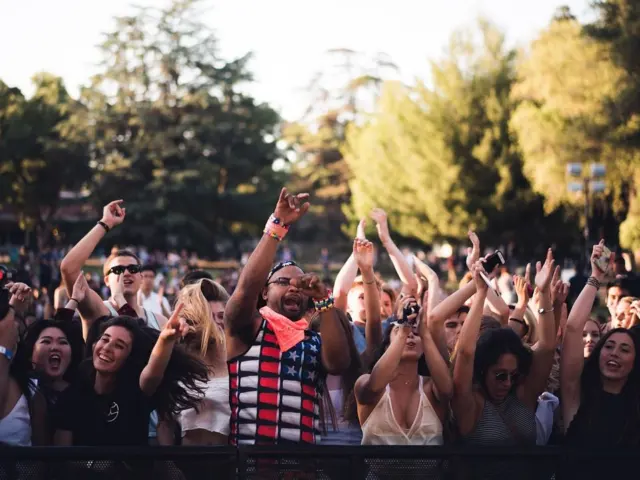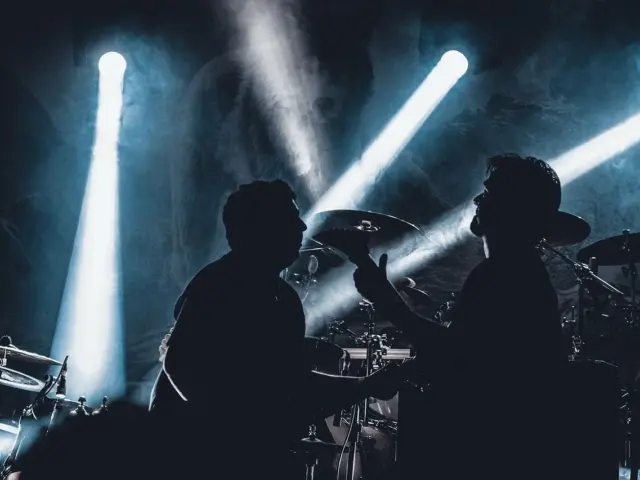
The Belgian rock scene runs on summer festivals, a few historic concert halls and a bench of bands that built their reputations on live work, from Antwerp clubs to Ghent studios.
This guide maps that scene for visitors and listeners: how it formed, where the big gatherings happen, which rooms matter and who to listen to first. This site is an independent music publication and is not affiliated with any band, label, venue or festival mentioned here.
How the Belgian rock scene took shape
Belgium is a small country with a large festival habit, and the rock story begins in the fields rather than in the capital. The Canon of Flanders, a cultural history project, names Jazz Bilzen as the real pioneer of summer festivals in Flanders. The multi-day event first took place in 1965, programmed jazz, folk, rock and pop, and drew up to 15,000 spectators a year. It showed that young audiences would travel for a long weekend of live music, and that idea still shapes the Belgian calendar.
The next landmark came a decade later. According to the same source, in the summer of 1975 in rural Werchter two bands performed to an audience of a few hundred, an initiative of the local Chiro youth group. In 1977 a collaboration with the West Flemish town of Torhout produced the double festival Torhout/Werchter, and from 1999 the event was held only in Werchter. That small village event became the country’s best-known rock gathering, and the story is told in more detail in the guide to Rock Werchter.
The early festival culture was broader than rock alone. The same Canon of Flanders page records that the 1967 Jazz Bilzen poster carried Ferre Grignard, Wannes van de Velde, Boudewijn de Groot and Procol Harum, a bill that mixed singer-songwriters with a rock band. It also notes that a few folk fans started a festival in the playground of a school in Dranouter in 1975, and that Festival Dranouter is today the largest folk festival in Europe. Even in the early years, then, Belgian festival audiences heard several traditions on the same bill.
Rock was never the only sound. The Canon of Flanders notes that electronic music grew up in a separate environment and was at first not heard at the big festivals, which were often rock-orientated, although Tomorrowland later helped put Flanders on the map as a festival region. Guitar bands and dance acts eventually shared the same stages, and that mix is part of why Belgian line-ups feel so varied today. The same entry points out that Technotronic scored a world hit with the house number Pump up the Jam, and that the labels Bonzai Records and R&S Records built international reputations, so the country’s club culture had its own export story alongside the guitar bands.
Individual artists gave the scene its identity. The Canon of Flanders describes Arno Hintjens (1949-2022), from Ostend, as a founding member of the influential band T.C. Matic in 1980 and later a successful solo artist. A generation later, the Dutch music magazine OOR wrote that in Belgian pop history people speak of before dEUS and after dEUS, with the Antwerp band’s debut album Worst Case Scenario, released in 1994, as the turning point. Those two reference points, T.C. Matic and dEUS, still frame many conversations about Belgian rock.
Festivals: the backbone of the calendar
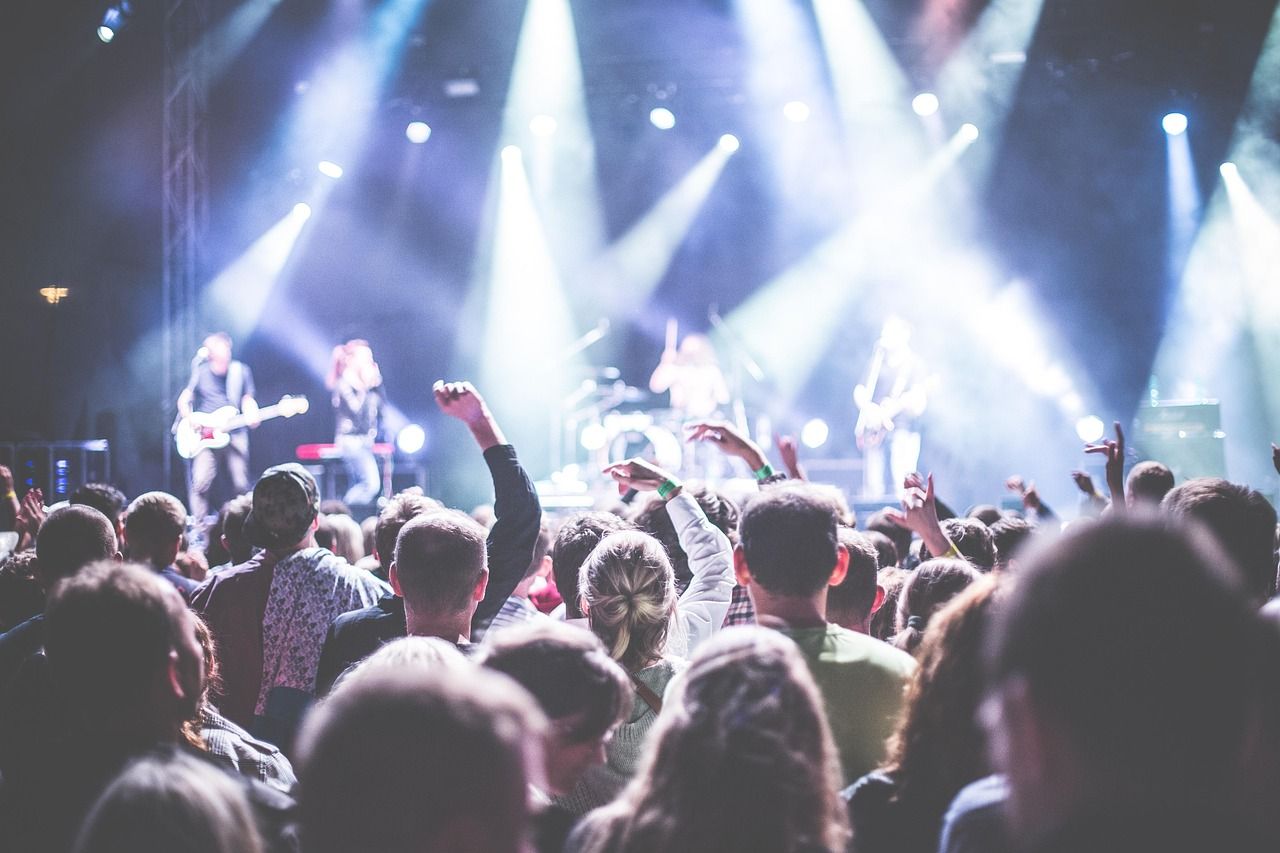
Festivals are where most visitors meet Belgian rock, and the season now stretches from early summer to late August. Rock Werchter’s official site lists the 2027 edition for 1-4 July at Festivalpark Werchter. The same Canon of Flanders page lists U2, Patti Smith, R.E.M, The Chemical Brothers, Faithless, Kendrick Lamar, Metallica and Lady Gaga among the international names who have played the Flemish-Brabant village, which gives a sense of the festival’s reach.
In the east of the country, Pukkelpop announces its next edition for 19-22 August 2027. The festival has a long, public history of its own, and the official site is candid about its hardest day: on 18 August 2011, Pukkelpop was hit by a severe, unexpected storm, five people lost their lives and dozens were injured. A monument opposite the festival site commemorates the victims. The profile in the Pukkelpop guide covers the festival in more detail, and Belgian bands remain part of its programme. The official page for the 2026 edition lists dEUS on the Marquee stage and Soulwax on the same stage.
One practical detail stands out from the official dates. Rock Werchter and Les Ardentes list the same dates in early July 2027 (1-4 July), so a visitor has to choose between the Flemish-Brabant field and the Liège site rather than attend both. Dour follows within days, and Pukkelpop closes the season in late August. Anyone planning a longer trip can therefore stack Dour and Pukkelpop, or Werchter and Dour, but not Werchter and Les Ardentes.
Other festivals widen the picture. The Dour Festival 2027 takes place from Wednesday 7 July to Sunday 11 July in Dour, in the south. Les Ardentes lists its 2027 edition for 1-4 July in Liège. Metal fans have Graspop Metal Meeting, which is already announcing headliners for the 30th edition. In Ghent, the Gentse Feesten 2026 ran from Friday 17 July to Sunday 26 July, a city-wide street festival that the Canon of Flanders says was relaunched by Walter de Buck and a few supporters.
For a season-long view, including how the dates stack up and how to choose between the big events and the smaller ones, read the overview of Belgian music festivals.
Venues: concert halls, clubs and cultural centres
Outside festival season, the scene lives in a network of rooms. In Brussels the best-documented is the Ancienne Belgique, widely shortened to AB. Its own history page explains that in 1931 the entire building was entrusted to the 22-year-old Georges Mathonet from Liège, and the Ancienne Belgique era began. The same page records that, until 1979, a concert organiser brought in a mix of major artists including Leonard Cohen, Frank Zappa, Lou Reed, Kraftwerk and The Clash, that the Ministry of Finance purchased the premises in 1977, and that noise complaints led the city council to withdraw the operating licence in 1980. The hall reopened after a major rebuild: when the brand-new AB re-opened in 1996, the building had been enormously expanded. It now programmes concerts in its Main Hall and its Club, and since 2017 it has been one of seven official Flemish Arts Institutions.
The hall’s earlier decades are a useful reminder that it was not always a rock venue. The AB’s history page recalls that in the post-war music hall years the performers included Charles Aznavour and Édith Piaf, and that Jacques Brel was a real regular. It adds that in 1954 Bruno Coquatrix, who had previously worked at the AB, took over the Olympia in Paris, and that in the 1960s management booked yé-yé artists such as Johnny Hallyday and Claude François to reach a younger audience. In 1971 Mathonet closed the doors. A thorough noise audit was ordered in 1986, ahead of the big rebuild. That rebuild gave the AB its own recording studio, which the page says can broadcast concerts around the world. The page also describes the AB Club as a true breeding ground for young artists.
In the same city, the cultural centre profiled in Botanique Brussels has a very different past. Its own history page says that le Botanique was inaugurated in 1829 as a national botanic garden and became the cultural centre for the French Community of Belgium on the 23rd of January 1984. It describes itself as dedicated to live music and art exhibitions, and says the first edition of the Nuits Botanique took place in September 1994. The same page notes that from 1823 to 1939 the building was a haven for science and botanical studies, and it quotes Victor Hugo saying that Brussels possesses two unique wonders of the world, its Grand-Place and the panorama of the Jardin Botanique. It also states that Belgian chicory, the witloof, was invented there. The listing on its programme page shows concerts spread across several rooms, including the Rotonde, the Witloof Bar and the Museum. The venue sits at Rue Royale 236 in Brussels.
Flanders has its own circuit. In Antwerp, Trix presents itself as a home for live concerts, studios and workshops at Noordersingel 28-30, a reminder that a club in this country is often also a rehearsal space and a training ground. The wider city is covered in the guide to Antwerp live music venues. In Ghent, a similar mix of halls and clubs is mapped in the guide to Ghent live music.
The practical lesson is that the festival headlines are only part of the picture. Venues such as these publish their own programmes year-round, so a visit outside the summer still has plenty to offer.
Bands and artists to start with
A full survey sits in the guide to Belgian rock bands, but a short list helps orient a first listen. Each name below is tied to something a published source says.
dEUS. The Dutch magazine OOR calls the Antwerp group’s debut album Worst Case Scenario, released in 1994, the hinge of Belgian pop history, and reports that in 2026 the Antwerp band is touring Europe with near-complete performances of that debut and of the follow-up In A Bar, Under The Sea. That makes dEUS a natural starting point.
Triggerfinger. Louder reports that the trio set out in Antwerp circa 1998, and that their cover of Lykke Li’s I Follow Rivers reached No.1 in six countries. The drummer Mario Goossens recalls the band supporting the Stones, which gives a sense of how far a club band from Antwerp can travel.
Soulwax. Dezeen describes the group as made up of Ghent-born brothers David and Stephen Dewaele, who also work as 2manydjs and use their Ghent studio as the hub for their label Deewee. The building was originally finished in 2013. The band sits at the point where rock, electronics and club culture overlap, which is a very Belgian place to be.
Arno and T.C. Matic. For a look further back, the Canon of Flanders entry on Arno Hintjens is the best primary reference. It describes T.C. Matic as influential and credits Arno with a successful solo career afterwards, which makes Arno a useful chapter to explore once the more recent bands are familiar.
These four reference points are not a ranking. They are simply the artists that the sources cited here describe in concrete terms, and they cover different decades, cities and sounds. A listener who works through them in turn, from Arno to the Ghent electronics of Soulwax, will hear a wide range of sounds. The dedicated guide to Belgian rock bands expands the list and keeps the same standard: only what a named source supports.
Radio and media that carry the scene
Belgian rock is also a broadcast story. VRT describes itself as the public broadcaster of the Flemish Community in Belgium, and its youth-oriented station is profiled in the guide to Studio Brussel. Transform magazine notes that, since its creation in 1983 by the VRT, the Dutch-language station has been known for its distinctive take on music, and that its 2019 relaunch as StuBru aimed to keep the focus on music and youth culture while moving to a digital-first platform.
The VRT also runs several other services, but the point for rock listeners is simple: a national broadcaster with a youth-focused music station gives the scene a regular shop window that does not depend on festival season. The rebrand coverage is a good reminder that the station has adapted to digital listening rather than staying a pure radio brand.
For a visitor, radio is a free preview of the scene. Playlists and festival coverage show which artists are rising, which venues they play, and which festivals are likely to book them next. Many festivals publish line-ups and set times on their own sites, so a listener can build a shortlist before travelling.
A short timeline of Belgian live music
The dates below come from the official and public-body sources cited in this guide, and they show how a regional festival culture grew into the calendar visitors see today.
- 1829: le Botanique opens as a national botanic garden, according to its own history page.
- 1931: the Ancienne Belgique era begins under Georges Mathonet, per the AB’s history.
- 1965: Jazz Bilzen holds its first edition, according to the Canon of Flanders.
- 1975: two bands play to a few hundred people in Werchter.
- 1977: the double festival Torhout/Werchter begins.
- 1980: Arno Hintjens is a founding member of T.C. Matic.
- 1983: the VRT creates Studio Brussel, as reported by Transform magazine.
- 1984: le Botanique becomes the cultural centre for the French Community of Belgium.
- 1994: dEUS release Worst Case Scenario, and the first Nuits Botanique takes place.
- 1996: the rebuilt Ancienne Belgique reopens.
- 1999: the festival at Werchter is held without Torhout.
- 2011: a severe storm hits Pukkelpop, as recorded on the festival’s own history page.
Taken together, the list shows two parallel stories. One is institutional, with a botanic garden and a music hall turning into publicly supported venues. The other is grassroots, with youth groups and small festivals building audiences that later made the larger events possible.
Planning a trip around Belgian rock
The simplest way to see the scene is to pick one anchor event and build around it. A summer visit might use one of the big festivals as the centrepiece and add club nights in Brussels, Antwerp or Ghent on either side. A winter or spring visit can lean on the halls instead, where Botanique and the AB publish rolling programmes.
Before booking, check each venue’s own site for the current programme and ticket terms, because dates, line-ups and policies change from year to year. A few habits help on any trip:
- Start from the official festival or venue site rather than a reseller, and compare the dates quoted above with the current listing.
- Pair one large show with one small-room show, so the trip covers both ends of the scene.
- Use the guides linked here to decide where to base yourself, then check transport options on the day.
For concert-going basics such as tickets, etiquette and hearing care, the broader live music guide covers the essentials, and the rock music guide explains the genres behind the names in this guide if you want more background before you go.
Frequently asked questions
When is the main Belgian festival season?
Show answer
It runs through the summer. The official sites cited above list Rock Werchter and Les Ardentes for 1-4 July 2027, Dour Festival for 7-11 July 2027 and Pukkelpop for 19-22 August 2027, so visitors can plan a trip that covers more than one.
Which venue is the best place to start in Brussels?
Show answer
The Ancienne Belgique and Botanique are the two best-documented options. Both publish their programmes online, and each has its own history page describing how the building came to host concerts.
Is this site connected to any of the bands or venues mentioned?
Show answer
No. This is an independent music publication. It is not affiliated with, endorsed by or representing any band, label, venue or festival named in its articles, and it does not sell tickets or merchandise.
Where should a first-time listener begin?
Show answer
The dEUS debut album Worst Case Scenario is the reference point named by OOR, and Triggerfinger and Soulwax offer two quite different live reputations. The bands guide expands on all three.