Belgian rock bands such as dEUS, Triggerfinger and Soulwax come from Antwerp and Ghent, and each has built a reputation on touring, studio craft and festival slots, which makes them good places to start.
The wider setting, from festivals to venues and radio, is explained in the guide to the Belgian rock scene. This page narrows the focus to artists, and it only states what a named published source supports. This site is an independent music publication and is not affiliated with any band, label, venue or festival mentioned here.
dEUS: the Antwerp reference point
If one name keeps coming up in Belgian rock conversations, it is dEUS. The Dutch music magazine OOR wrote that in Belgian pop history people speak of before dEUS and after dEUS, naming the band’s debut album Worst Case Scenario, released in 1994, as the turning point. The same article calls that debut a catalyst for a wave of individualistic acts that followed it.
OOR also describes the group as Antwerpers. According to the magazine’s 2026 coverage, the band is touring Europe with near-complete performances of that debut and of its follow-up, In A Bar, Under The Sea. For a listener, that pairing is a practical way to start, because the two albums sit side by side in the catalogue and the tour gave them a shared spotlight.
The band is also a regular on festival stages. The official Pukkelpop page for the 2026 edition lists dEUS on the Marquee stage, in a late-night slot. Festival listings like this are a useful reality check: they show which artists are still active on the live circuit rather than only remembered for old records.
Triggerfinger: an Antwerp trio with a big European following
Triggerfinger are a different proposition, a trio that also comes from Antwerp. A feature in Louder explains that drummer Mario Goossens, frontman Ruben Block and bassist Paul Van Bruystegem set out in Antwerp circa 1998 with the modest ambition to play music of an alt.blues-rock persuasion. Goossens names Howlin’ Wolf, Black Sabbath, Roxy Music, Nick Cave and Queens Of The Stone Age among the reference points, a list that tells you more about their sound than any genre label.
The commercial story, as Louder tells it, was slow at first. A self-titled debut album in 2004 did little, and so did 2008’s What Grabs Ya, but the 2010 album All This Dancin’ Around achieved platinum sales. Soon after, the band’s cover of Lykke Li’s I Follow Rivers reached No.1 in six countries, and Louder reports a combined 30 million streams of the song on Spotify and YouTube. The same feature notes that the band played a support slot at the Rolling Stones’ Hyde Park show in 2013, and that it performed in the ring before the 2012 heavyweight title fight between Wladimir Klitschko and Tony Thompson.
Louder also places the band in context. It writes that the title of the fifth album, Colossus, is wholly fitting in Belgium or Holland, where platinum sales of 20,000 and 40,000 respectively and playing 8,000-capacity venues are par for the course. In Britain, the same feature says, the band do not mean much at all.
Soulwax: rock, electronics and a Ghent studio
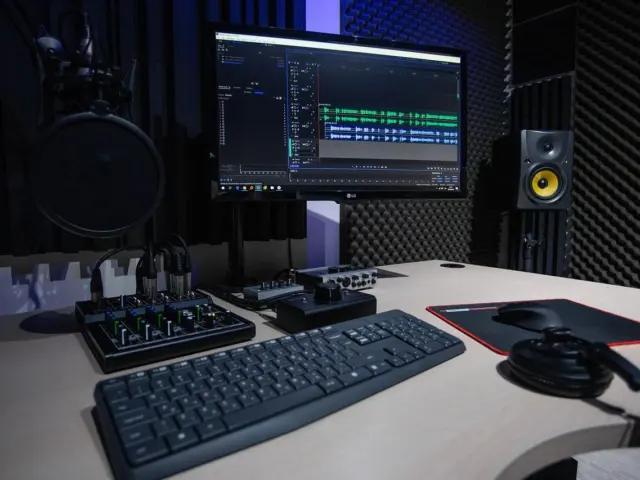
Ghent contributes a different strand of Belgian rock. Dezeen describes Soulwax as made up of Ghent-born brothers David and Stephen Dewaele, also known as 2manydjs, who use their studio as the hub for their record label Deewee. The building was originally finished in 2013, and according to the brothers every record on the label has in some capacity been produced there. The photographs in the article were taken to mark the label’s 50th release.
The studio says something about how the band works. Dezeen explains that the building revolves around a central recording room, and that above it sits a library housing the brothers’ entire collection of 60,000 vinyl records. That is a useful clue for new listeners: the brothers work as DJs as well as band members, so their records sit between rock and club music. The official Pukkelpop page for 2026 lists the band on the Marquee stage, late at night.
Arno and T.C. Matic: a generation earlier
For an earlier chapter, the Canon of Flanders, a cultural history project, describes Arno Hintjens (1949-2022), from Ostend, as a founding member of the influential band T.C. Matic in 1980 and later a successful solo artist. That single sentence is a reminder that Belgian rock has a history before the bands above.
The Canon of Flanders is also where the festival story begins, since it traces Rock Werchter back to a summer in 1975 when two bands played to a few hundred people. The scene therefore has small beginnings.
Where to see Belgian bands live
Festivals and small venues are the two best routes. In Brussels, the cultural centre described in the guide to Botanique Brussels publishes figures that show how much of its programme is local. Its history page says that of the artists it presents each year, around 35% are from Belgium, mostly from Wallonia and Brussels. The same page describes the centre as dedicated to live music and art exhibitions, and its programme page lists concerts across several rooms.
For a summer trip, the season overview in Belgian music festivals explains how the main events fit together. Two dates are worth noting here. Pukkelpop’s official site says its next edition runs 19-22 August 2027, and Rock Werchter’s official site lists 1-4 July 2027 at Festivalpark Werchter. Dates and line-ups can shift, so confirm them on the festival sites before booking travel.
Venues in the bands’ home cities are the other half of the picture. In Antwerp, Trix presents itself as a home for live concerts, studios and workshops at Noordersingel 28-30, and its programme page lists a steady run of concerts. In Brussels, the Ancienne Belgique says on its history page that it programmes concerts in the Main Hall and the Club, and describes the Club as a true breeding ground for young artists. A smaller room is often the place where an act you have only heard on record sounds most like itself.
How to explore these bands
A simple route is to take one artist from each of the three cities and compare. Start with the two dEUS albums named by OOR, then move to Triggerfinger’s 2010 album All This Dancin’ Around, which is the record the Louder feature says achieved platinum sales. Finish with a Soulwax release from the Deewee label and notice how the sound changes when electronics enter the picture.
Listening in this order lets you hear the range of the scene without needing a guide: songwriter-led rock from Antwerp, hard-hitting live rock from the same city, and a Ghent act that blends guitars with dance culture. If a live date appears on a festival or venue site, treat it as a chance to hear the same material in a different setting.
Frequently asked questions
Which Belgian rock band should a newcomer hear first?
Show answer
OOR names dEUS and the 1994 album Worst Case Scenario as the turning point in Belgian pop history, so that debut is the usual first stop. Triggerfinger and Soulwax then offer two quite different directions.
Are these bands from the same city?
Show answer
No. dEUS and Triggerfinger are described by their sources as Antwerp bands, while Soulwax is made up of Ghent-born brothers, and Arno came from Ostend.
Can I see Belgian bands at festivals?
Show answer
Yes. The official Pukkelpop page for 2026 lists both dEUS and Soulwax on the Marquee stage, and the scene guide on this site explains how the other festivals fit together.
Is this website connected to any of the bands?
Show answer
No. This is an independent music publication, not affiliated with, endorsed by or representing any band, label, venue or festival named here, and it does not sell tickets or merchandise.