Belgian music festivals fill the summer from early July to late August, with rock at Werchter and Pukkelpop, metal at Graspop Metal Meeting, dance at Tomorrowland and a broad mix at Dour.
This overview sets the main events side by side so a visitor can see how the season fits together. It belongs to the wider guide to the Belgian rock scene, and it is an independent publication that is not affiliated with any festival, band or label named here. Dates below come from each festival’s own site and can change, so confirm them before booking.
The season at a glance
The simplest way to read the calendar is to start with the next editions that organisers have announced. Each date in the list links to the festival’s own page.
- Rock Werchter lists 1-4 July 2027 at Festivalpark Werchter.
- Les Ardentes lists 1-4 July 2027 in Liège, the same dates as Werchter.
- Dour Festival 2027 runs from Wednesday 7 July to Sunday 11 July in Dour.
- Pukkelpop announces 19-22 August 2027 for its next edition.
- Tomorrowland Belgium 2026 in Boom had two weekends, 17-19 July and 24-26 July.
Two things stand out. Werchter and Les Ardentes overlap completely, so a traveller has to choose between them. And July dominates the dates listed here, with Pukkelpop closing the season in late August.
How the festival habit began
Belgian festivals have deep roots. The Canon of Flanders, a cultural history project, says that Jazz Bilzen, which first took place in 1965, was the real pioneer of summer festivals in Flanders, programming jazz, folk, rock and pop and drawing up to 15,000 spectators a year. The same source records that in the summer of 1975 two bands played to a few hundred people in Werchter, an initiative of the local Chiro youth group, and that from 1977 the double festival Torhout/Werchter allowed organisers to bring in bigger names.
Other seeds were planted at the same time. According to the Canon of Flanders, a few folk fans started a festival in the playground of a school in Dranouter in 1975, and Festival Dranouter is today the largest folk festival in Europe. In Ghent, the Canon says Walter de Buck and a few supporters relaunched the Gentse Feesten. Dance culture arrived later, and the same source notes that new successes like Tomorrowland put Flanders permanently on the map as a festival region.
The Canon of Flanders also shows how mixed those early festival bills were. It records that the 1967 Jazz Bilzen poster carried Ferre Grignard, Wannes van de Velde, Boudewijn de Groot and Procol Harum, so rock, folk and singer-songwriters shared one field. The same page notes that the labels Bonzai Records and R&S Records built international reputations in dance music, and that Technotronic scored a world hit with the house number Pump up the Jam. Festivals therefore grew alongside a club scene rather than apart from it.
Even the name of the biggest rock festival has changed. The official Rock Werchter history page lists its early editions as the Rock & Blues Festival Werchter in 1975, and later as Rock Torhout / Werchter, before the simple name Rock Werchter appears for the 1999 and 2000 editions. That list is a quick way to see how the event evolved from a youth-group party into a long-running fixture.
Rock and metal events
Rock Werchter remains the best-known rock gathering. The festival’s own history page for 2025 lists Linkin Park and Deftones on Thursday 3 July, Green Day and Simple Minds on Friday 4 July, and Yungblud and Nothing But Thieves on Saturday 5 July. The Canon of Flanders adds that U2, Patti Smith, R.E.M, The Chemical Brothers, Faithless, Kendrick Lamar, Metallica and Lady Gaga have also played the village.
Pukkelpop is the late-summer counterpart. Its official page for the 2026 edition lists the line-up, with dEUS and Soulwax both listed on the Marquee stage. The festival’s history page also records its hardest day: on 18 August 2011, Pukkelpop was hit by a severe, unexpected storm, five people lost their lives and dozens were injured. A monument opposite the site commemorates the victims.
Metal fans have their own event. Graspop Metal Meeting is already announcing headliners for the 30th edition, which tells you how long the festival has been part of the calendar. For listeners who want to know which local bands appear at festivals like these, the guide to Belgian rock bands profiles several of them and explains what the sources say about each.
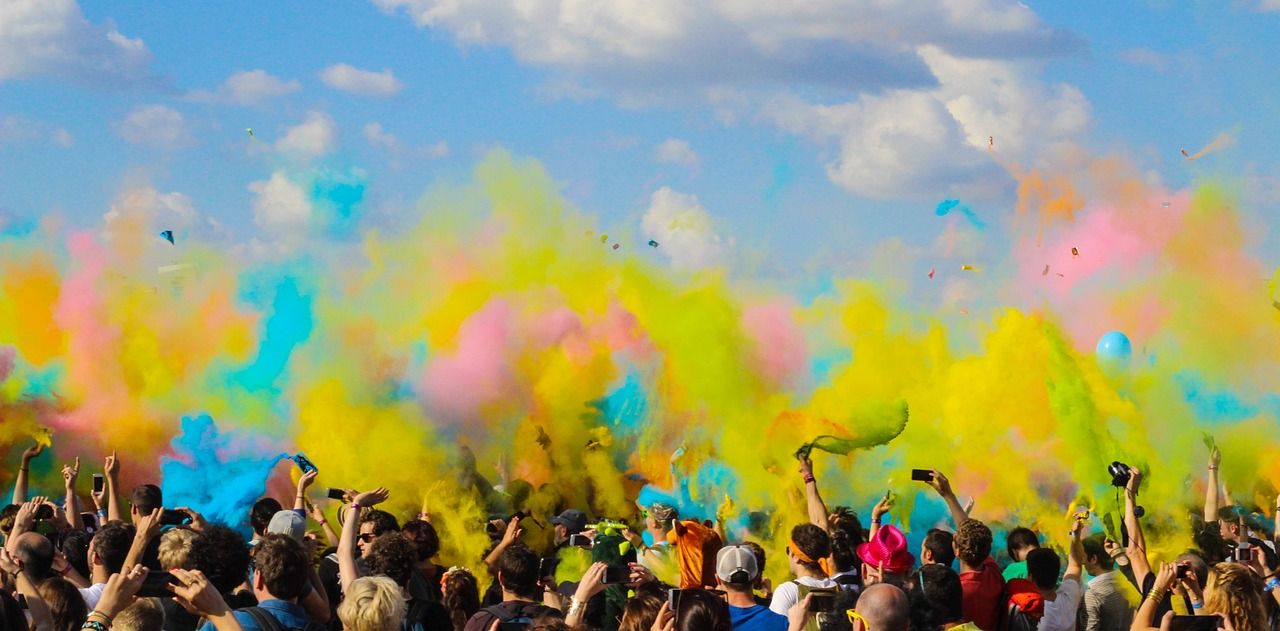
Dance, city and genre-mixing festivals
Not every Belgian festival is rock-led. The Canon of Flanders says that electronic music developed in a separate environment and was at first not heard at the big festivals, but that DJs gradually conquered the festival stages. Tomorrowland, with its two July weekends in Boom, is the best-known result. Les Ardentes describes itself on its own site as a summer gathering in Liège, with a history of 20 years.
Dour is covered by its own dates above, and its FAQ shows that its ticket packages include access to any chosen themed campsites. City festivals work differently again. The Gentse Feesten site shows that the 2026 edition ran from Friday 17 July to Sunday 26 July.
Planning around the calendar
Practical details matter as much as line-ups. Dour’s FAQ explains one example: on 1 March 2026 the Belgian government raised the VAT rate on overnight stays from 6% to 12%, and the festival responded with a Festival & Camping Ticket that bundles camping access with the concert ticket. The same package includes a 40% discount code for SNCB train journeys and a return shuttle between Quiévrain station and the site. Rules like these change from year to year, so read the current FAQ for any festival you plan to attend.
Timing also matters. Couleur Café reported that its early-bird tickets sold out before general sale even opened, which is a reminder that popular events can sell quickly. A sensible plan is to choose one anchor festival, note when its sales start, and book transport and accommodation after the dates are confirmed.
Between festivals, the year-round venue circuit takes over. A city-by-city view of concert rooms, including how to find smaller shows, is given in the guide to Antwerp live music venues. Combining a festival weekend with a night in a club gives a fuller picture of how Belgian live music works.
Frequently asked questions
When is the Belgian festival season?
Show answer
It runs through the summer. The official sites cited above list Rock Werchter and Les Ardentes for 1-4 July 2027, Dour for 7-11 July 2027 and Pukkelpop for 19-22 August 2027.
Can I attend both Rock Werchter and Les Ardentes?
Show answer
Not in 2027 on the dates currently listed, because both sites give 1-4 July. Dour begins a few days later, so Werchter and Dour can be combined.
Which festival is best for rock fans?
Show answer
Rock Werchter is the one the Canon of Flanders traces back to 1975, and Pukkelpop is its late-summer counterpart, while Graspop Metal Meeting covers metal. Dates and line-ups should be confirmed on each festival’s site.
Is this website connected to any festival?
Show answer
No. This is an independent music publication. It is not affiliated with, endorsed by or representing any festival, band or label named here, and it does not sell tickets.